




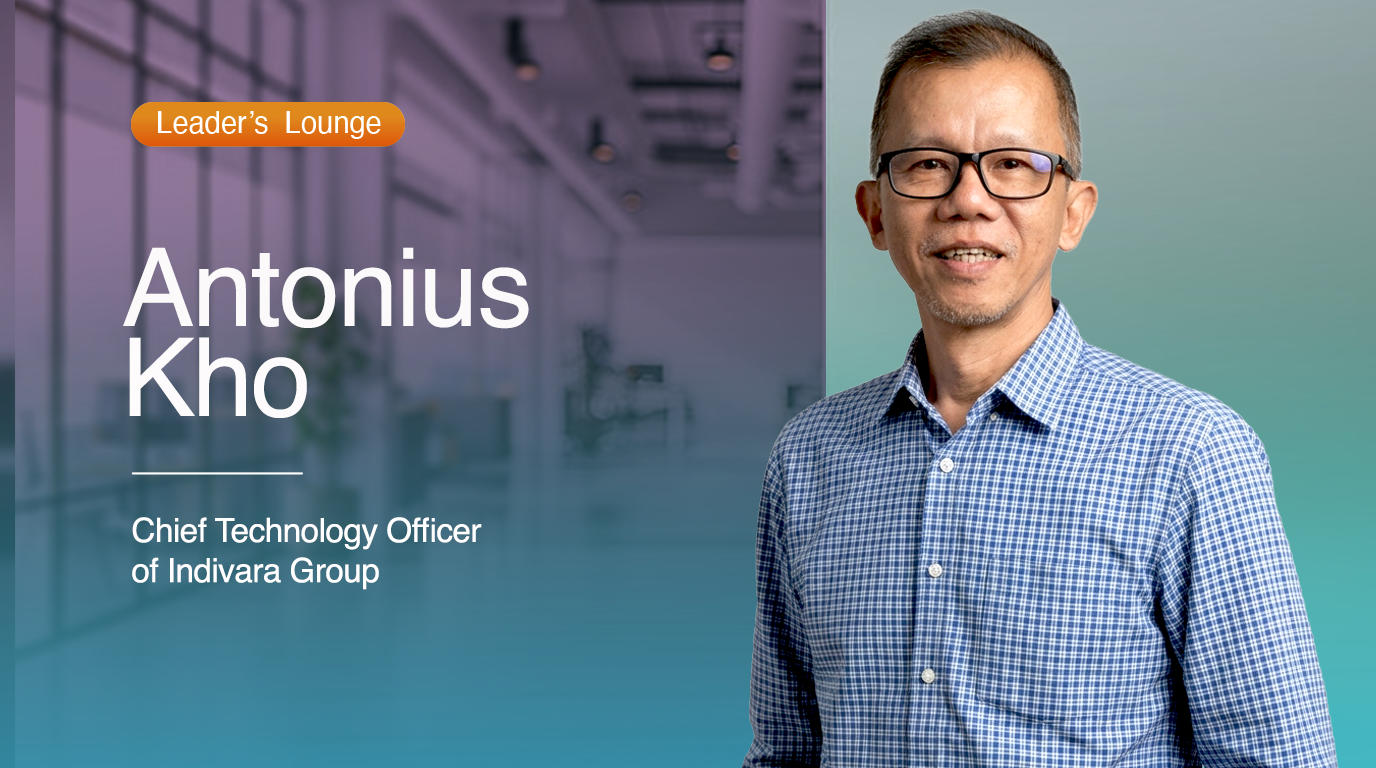
Technology has remained at the center of Antonius Kho’s career. Over time, he built a broader view of what it takes to make technology work: understanding the industry, the business, and the people responsible for delivering it.
“My core competency has always been technology,” Antonius says. His career has taken him from telecommunications pre-sales and consulting to IT leadership, a CEO role, and his current position as CTO of Indivara Group. Each move widened his experience while building on the same technical foundation.
From configuring systems to understanding the business
After university, Antonius began his career at a distributor of Lucent Technology products as a pre-sales specialist. He worked with Private Branch Exchange (PBX) systems and Interactive Voice Response (IVR) systems for call centers and phone banking. His role was to ensure that the telecommunications systems were configured correctly and could handle the call volumes customers expected.
A few years later, he wanted to grow beyond becoming an expert in a specific product area. That led him to Andersen Business Consulting, where he became a CRM Solutions Consultant in 2000.
At Andersen, his work on customer relationship management (CRM) expanded his perspective. His earlier experience had focused on call centers and phone banking, especially in banking. CRM introduced him to a wider set of business questions: how companies serve customers, retain them, and encourage repeat business across different industries.
He also learned how consulting methodology can make an approach repeatable across projects. The work was no longer simply about implementing a tool. It involved understanding the client’s strategy, processes, and organization and how technology could support them.
Moving from consultant to IT leader
In 2003, Antonius moved to Kalbe Nutritionals as GM of IT. The move took him from the consulting and vendor side to the customer side, where he led an internal IT organization and took responsibility for its day-to-day work.
That changed the nature of his job. Consulting projects had a defined delivery and end point; in an operating business, technology services had to keep supporting the organization. He had a team to lead and had to consider how IT could improve processes, manage costs, and enable the business.
This experience began to shift his role beyond technology delivery. As he put it, his responsibilities increasingly included the business: how IT could not only support the company, but help it operate and grow.
In 2014, he became CIO of JNE. The role brought him closer to business decisions and broadened the scope of his responsibilities.
That question became tangible in his next role. Antonius took on the CIO role at Bluebird in 2015, at a time when appbased ride services were changing the taxi business. Bluebird needed to respond to customers who could book a ride through a mobile app, so he helped revamp and relaunch the company’s booking applications for iPhone and Android.
The assignments gave him experience with technology challenges in two different operating environments: logistics at JNE and transportation at Bluebird. In each, the work involved understanding how technology could improve the company’s services and support its business goals.
A broader perspective on the path to CTO
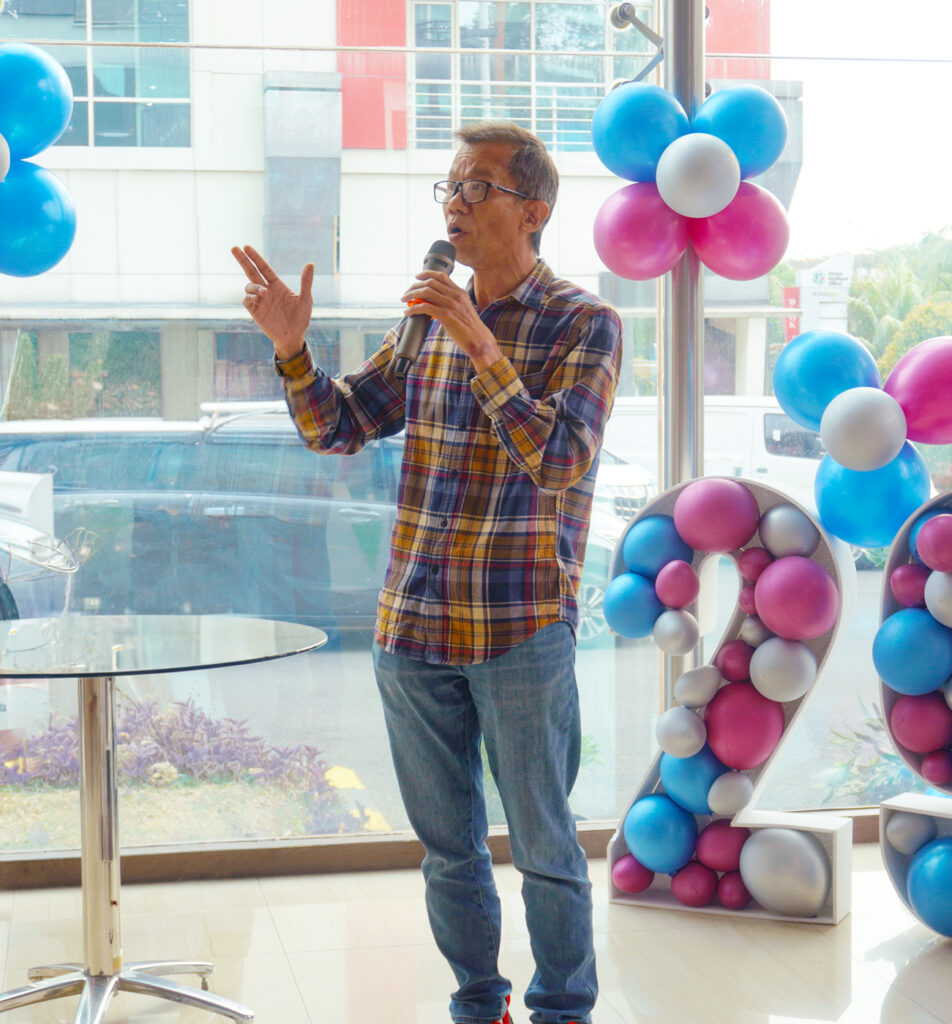
When Antonius became CEO of Jatis Solutions in 2017, he had already seen the company from the client side through his earlier IT leadership roles. That experience gave him a customer’s perspective on working with technology providers, one he could bring to his next role.
At Jatis Solutions, Antonius moved from evaluating technology providers as a client to helping lead one. His CEO role gave him a new perspective: understanding how the company’s solutions supported its business and generated revenue, alongside the technology itself.
Looking back on the moves across his career, Antonius sees a thread connecting them. “My experience has been about adding value,” he says. “It wasn’t about moving into unrelated fields.”
In 2024, he returned to what he calls his “original habitat”—technology—when he became CTO of Indivara Group. He brought with him a wider view of what technology leadership requires: “Without knowledge of the industry, any skill can become useless. You have to understand the context in which you’re applying it.”
That perspective shapes how he approaches Indivara’s work with businesses across different industries: connecting technology solutions to the needs of the organizations and sectors they serve.
Leadership means setting an example
Antonius sees developing people as one of a leader’s hardest responsibilities. A server can run consistently once it is properly designed and configured. People have different motivations and mindsets; helping them work toward a shared goal takes continued effort.
He sees a leader’s success as something built with the team. “Your success comes from having team members who work closely together, support each other, and help you achieve the objectives of your organization,” he says.
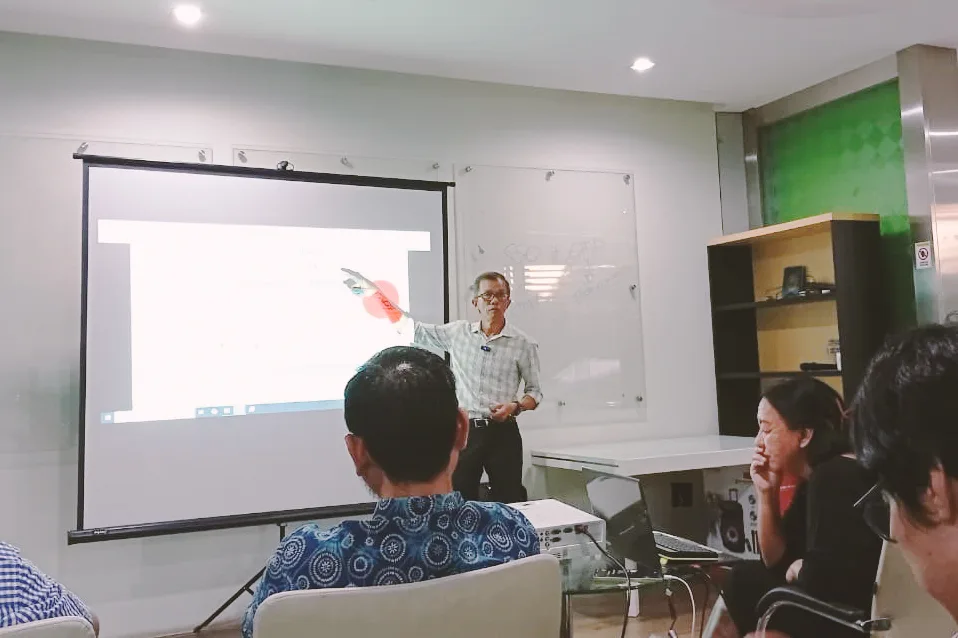
His view of leadership draws on Ki Hajar Dewantara’s philosophy, captured in the Javanese motto “Ing ngarso sung tuladha, ing madya mangun karsa, tut wuri handayani”—“in front, set an example; in the middle, build initiative and motivation; from behind, give encouragement.” Antonius also believes that a leader must take responsibility when the team makes a mistake, then work with the team to fix the problem.
Difficult decisions are part of that responsibility. Antonius says leaders need to balance empathy with the organization’s objectives and the facts of a situation. “Have the courage to make a decision, but consider the data and facts,” he says.
Keep learning; keep earning trust
Antonius says each new role has brought a learning curve. When he encounters something he does not yet know, he looks for information and works to close the gap. That habit has served him throughout a technology career spanning the pre-internet era, cloud computing, and AI.
“I have to push myself just to stay relevant,” he says.
He also distinguishes between extra effort as a goal and the desire to improve the work. “I’m not satisfied with what I’m producing, so I want to make it better.” That drive to improve can lead to new ideas and better ways of working.
For future leaders, Antonius returns to two qualities: competence and character. Competence needs to be built continuously as skills and technologies change. Character is demonstrated through the principles a person consistently follows.