






A perspective shared by Indivara CTO Antonius Kho.
In Indonesian, the words pemimpi (dreamer) and pemimpin (leader) differ by just one letter. For Indivara Group CTO Antonius Kho, that small difference offers a useful way to think about leadership.
A dreamer can imagine a better future. A leader goes a step further: helping others see that future and bringing them together to make it happen.
Turning a vision into a shared effort takes more than individual talent. People need to understand where they are going, have the skills to contribute, and work in an environment that supports collaboration. Antonius describes these conditions as the 3Cs: clarity, climate, and competency.
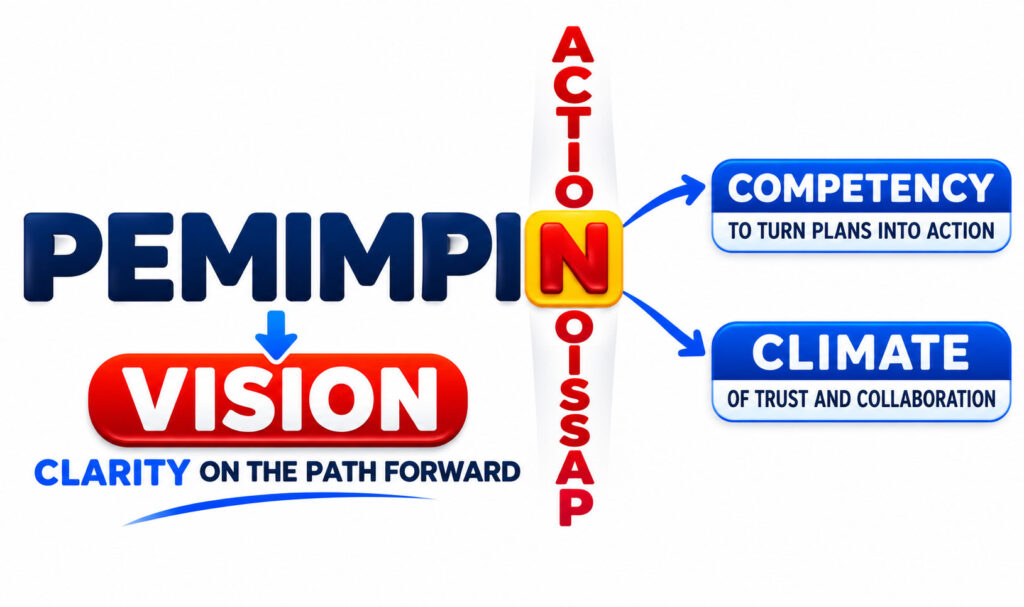
The three conditions that make leadership work
Imagine a team of highly capable people, each bringing their own experience. Without a shared direction, they may all be busy while moving toward different goals. And without a supportive climate, even a clear direction may not be enough to bring their strengths together.
The 3Cs of leadership
1. Clarity
A shared direction, clear responsibilities, and an understanding of how each person contributes.
2. Climate
A culture of trust, respect, recognition, and collaboration.
3. Competency
The knowledge, skills, and behaviors to turn plans into meaningful work.
For Antonius, the three conditions work together. Clarity helps people understand where they are going, climate enables them to collaborate, and competency gives them the ability to contribute.
Together, these conditions help people work toward a shared vision. But having a shared vision is only the beginning. What does it take to turn that vision into progress?
Vision gives direction. Action creates progress, Passion fuels the Actions towards achieving the Vision
A vision sets a destination, but vision alone does not guarantee progress. As Antonius puts it: “You keep on dreaming, keep on dreaming, keep on dreaming, go nowhere, end up nowhere.”
Action begins to turn an idea into reality. But action also needs direction; otherwise, people may stay busy without moving closer to a meaningful goal.
Bringing a vision to life is rarely a one-time effort. Progress can be slow, and setbacks are inevitable. For Antonius, passion provides the fuel to keep going, helping people stay committed to the vision through challenges along the way.
Vision
Points the way toward the dream
Action
Moves people closer to the dream
Passion
Fuels the journey for the long run
An ambition that keeps people moving
Antonius challenges leaders to think beyond a vision that can simply be checked off. A company may aspire to be the best in its industry, but what does “the best” mean, and how long does that position last?
For him, a meaningful vision should continue to challenge an organization to improve and reach beyond what it can already do. That does not make progress irrelevant; it raises a useful question for leaders: how can an enduring ambition guide the goals and decisions people make today?
Ambition also needs boundaries. Antonius distinguishes between strategy, which can change as circumstances evolve, and the core values that define an organization’s character.
Becoming the best should never justify cutting corners or compromising professionalism. How an organization pursues its vision matters as much as where it wants to go.
Values guide the way an organization pursues its ambition. But it is people who bring that ambition to life. For Antonius, leading them well also means understanding what they need from their work.
Understand what people need to contribute
Drawing on the four human needs described in First Things First by Stephen R. Covey, A. Roger Merrill, and Rebecca R. Merrill, Antonius reflects on how leaders can better understand the people they work with: their needs to live, to love, to learn, and to leave a legacy.
1. To Live
Fair compensation and security to support yourself and your family.
2. To Love
A supportive environment where people feel respected and recognized.
3. To Learn
Opportunities to develop skills, grow, and make progress.
4. To Leave a Legacy
A contribution that continues to make a meaningful difference over time.
For leaders, these needs offer a way to think about the environment they create and the opportunities they provide. One need that can be easy to overlook is the desire to leave a legacy.
A lasting contribution need not be grand. Antonius describes someone who improves a process that colleagues continue to use after that person has moved on. That, too, is a legacy.
What Turns a Dreamer Into a Leader?
For Antonius, the difference between a dreamer and a leader is what happens to the vision after it is imagined. A leader makes the direction clear, builds a climate of trust, and helps people develop the capabilities to contribute.
With those conditions in place, a leader’s vision can become a shared goal. Action moves people toward it, while passion fuels their commitment throughout the journey, helping them navigate challenges and keep going over the long run.
In the end, leadership is not only seeing a better future. It is about making that better future happen.