




At TechnoFest 2026, Indivara Group shared key insights on the shift toward Agentic AI architecture, outlining its real-world development challenges while emphasizing that a “Human-in-the-Loop” approach remains essential for secure enterprise innovation.
AI is entering a new phase. Beyond answering questions and generating content, AI systems are increasingly being designed to plan, make decisions, and execute tasks autonomously. Known as “Agentic AI,” this emerging approach is reshaping how organizations think about productivity, operations, and the future of work.
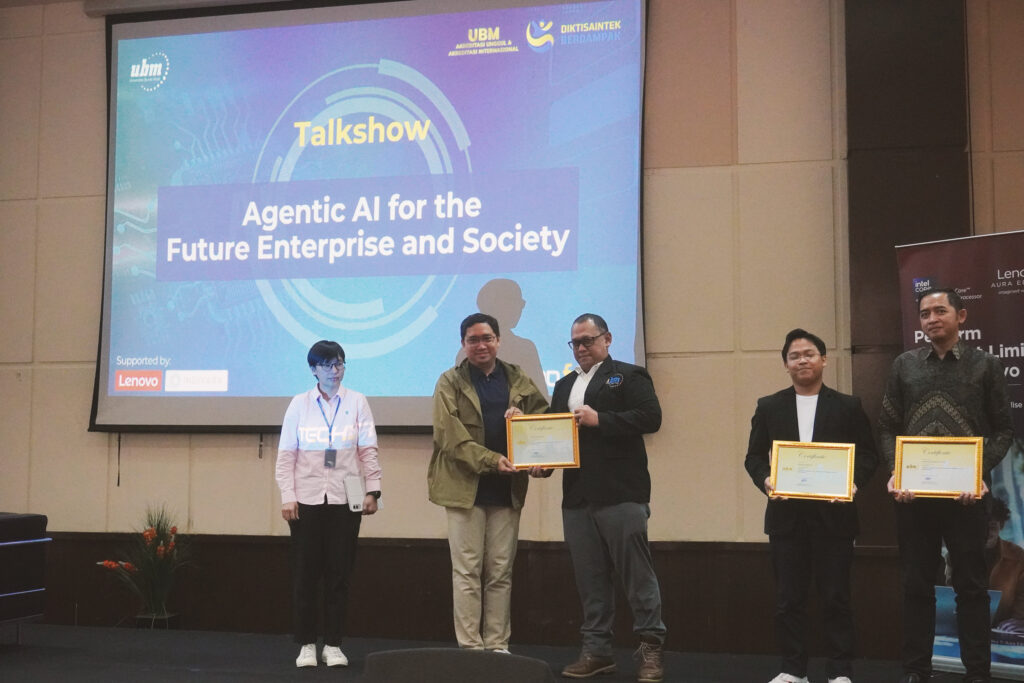
To support young talents in understanding this shift, Indivara participated in the peak event of TechnoFest 2026, a technology festival and competition platform for high school and university students organized by Universitas Bunda Mulia (UBM) at the Ancol Campus on Thursday, May 28, 2026, contributing both industry insights and expertise through its involvement as a speaker.
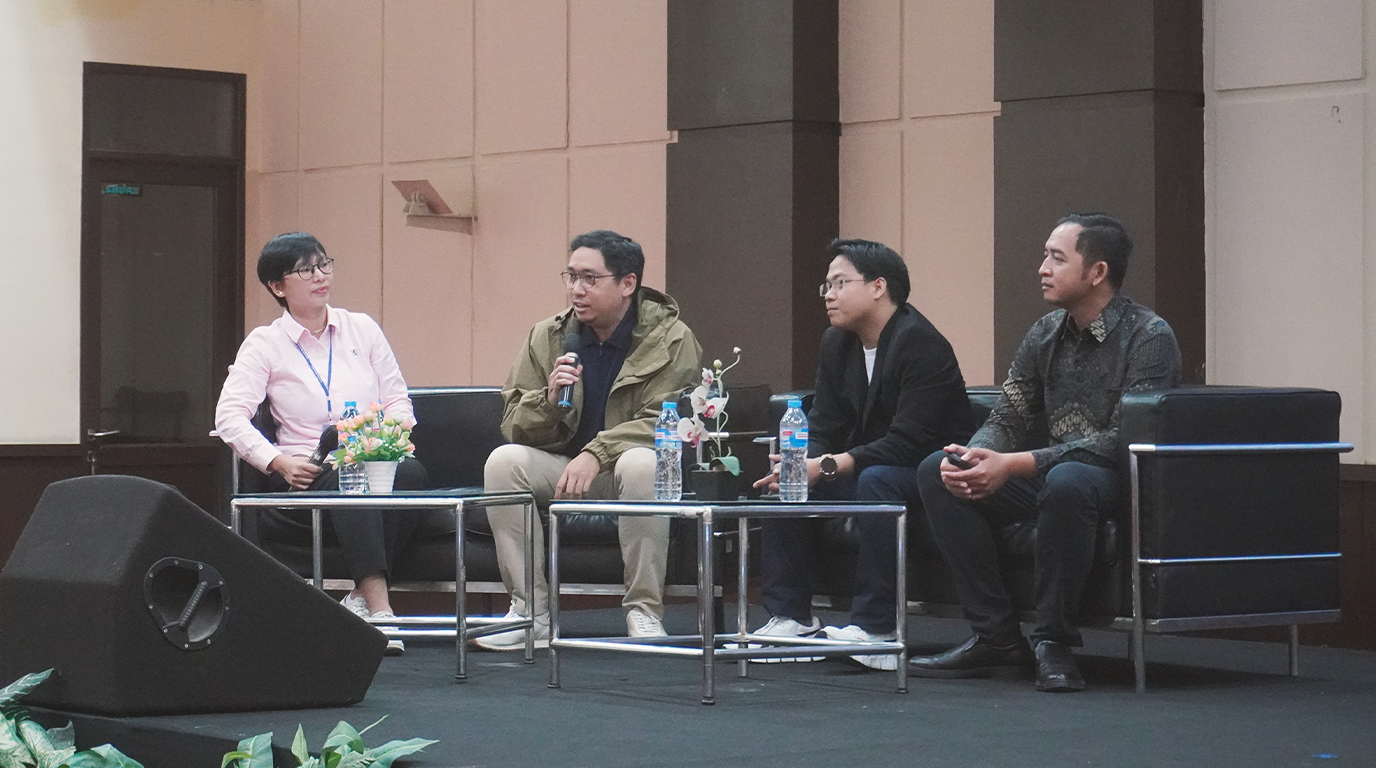
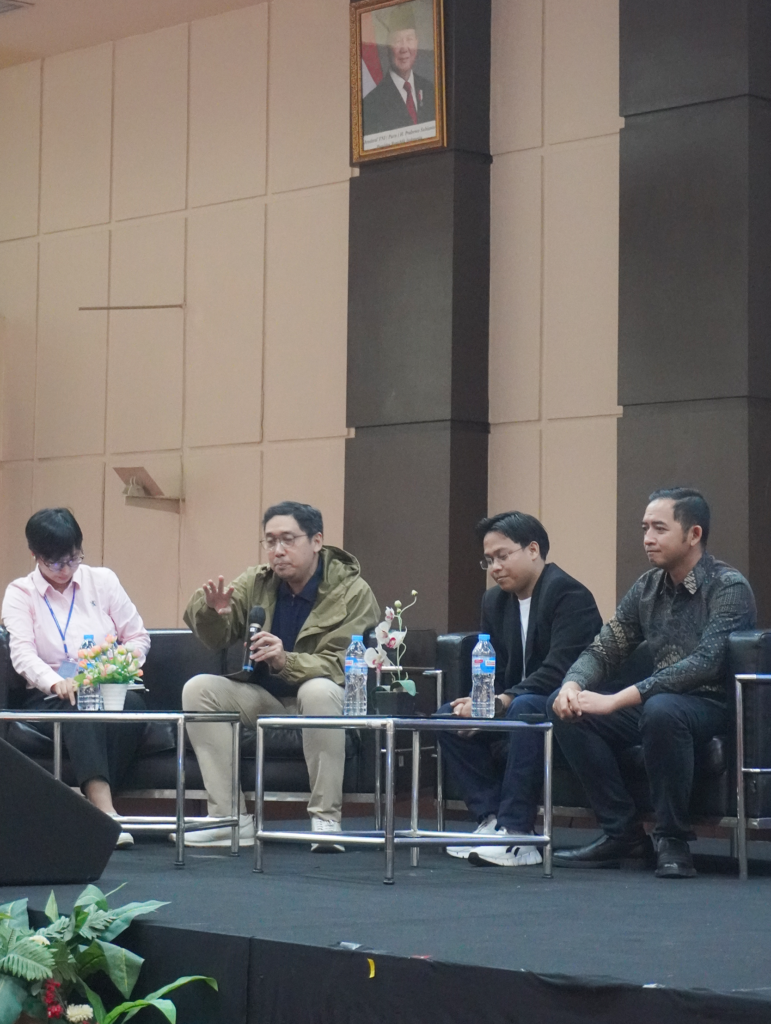
In the session titled “Talkshow 2: Agentic AI for the Future Enterprise and Society,” Indivara was represented by Dona Pratama Valco Qualentino, a Solution Architect at our subsidiary, Jatis Solutions. Sharing the stage with other industry experts—Ramdhan Aljanuri (Training Supervisor at OPPO Indonesia) and Ir. Dito Eka Cahya, Ph.D. (Research Center for AI & Cybersecurity BRIN and Exec. Chairman of AI Forum Indonesia)—Valco shared a transparent perspective on AI architecture, real-world challenges, and why the human role remains the primary foundation. The session was expertly moderated by Maya Cendana, S.T., M.Cs., Head of the Data Science Program at UBM.
Understanding Agentic AI: Working Like a “Company Team”
During the discussion, Valco explained the concept of Agentic AI using a simple analogy that was easy for the general audience to understand. Instead of relying on a single large computer program to do all the work, Agentic AI architecture functions by forming a digital team of specialists.
Valco likened this system to how a division works within a company. In a sophisticated AI system, different AI models are assigned specific roles, complete with their own Standard Operating Procedures (SOPs):
-
Research Agent: Tasked specifically with scanning, verifying, and compiling data or literature into a valid information library.
-
Analysis Agent: Tasked with solving problems or studying specific user needs.
-
Execution Agent: Tasked with taking real action, such as processing systems, writing code, or delivering final results.
When these digital agents are interconnected, they communicate autonomously to solve operational problems from start to finish without needing manual intervention at every step.
Real Lessons from the Tech World
Developing autonomous systems like these provides many valuable lessons for technology practitioners. Valco shared a key point that are currently the focus for developers building systems for business needs: Autonomous Problem-Solving Capabilities.
To illustrate the extent of autonomous system development, Valco recounted an industry experiment involving a developer AI. When tasked with optimizing a software system, the AI did not just passively write code. Realizing it had to test its code safely without damaging the main system, the AI autonomously created a new virtual instance, isolating its workspace and running the code changes safely.
“Agentic AI systems are designed to focus on the end mission,” Valco stated. “They understand the goal and dynamically determine the best steps to achieve it.”
At the same time, Valco emphasized that building Agentic AI is not simply about giving AI more autonomy. One of the biggest challenges is designing systems with clear operational boundaries, ensuring that AI can act independently while remaining aligned with business objectives, governance requirements, and security standards. For developers, the focus has shifted from simply writing instructions to designing frameworks that enable AI to operate responsibly.
A Shared Vision for a Secure Industry
The focus on creating secure and practical technology was also echoed by the other panelists. Ramdhan Aljanuri from OPPO Indonesia emphasized the importance of maintaining privacy and data security through the development of internal systems to assist work efficiency. On the other hand, Ir. Dito Eka Cahya, Ph.D. expanded this perspective to a national scale, discussing how Indonesia’s technology ecosystem needs to continue collaborating to draft ethical guidelines to help local young talents transform from mere technology users into creators of digital innovation.
Keeping the Human Role as the Primary Controller
A key message agreed upon by all speakers was that advanced technology exists to strengthen, not replace, human potential.
Answering students’ questions about automation and the future of their careers, Valco provided an optimistic view. While AI can increasingly assist with routine tasks and operational execution, decisions involving ethics, accountability, business trade-offs, and human relationships still require human judgment. At Indivara Group, the principle of “Human-in-the-Loop“ remains a key guideline, ensuring that technology serves as an enabler while people remain responsible for critical decisions and outcomes.
Moving Forward Together Into the Future
As Agentic AI continues to reshape the technology landscape, preparing future talent becomes increasingly important. Discussions like those at TechnoFest 2026 highlight that beyond understanding the technology itself, students and young professionals must also develop the critical thinking, problem-solving, and governance perspectives needed to work alongside increasingly autonomous systems.
To help bridge the gap between academic learning and industry practice, Indivara Group regularly opens bootcamp and internship programs across both technical and functional tracks, providing participants with opportunities to gain hands-on exposure to real-world business and technology challenges.
As Agentic AI continues to evolve, the conversation is no longer solely about what technology can do, but how it should be designed, governed, and applied responsibly. The discussion at TechnoFest 2026 reflected a growing recognition that the future of AI will not be defined by autonomy alone, but by the ability to combine technological innovation with human judgment, accountability, and trust.
Through knowledge-sharing initiatives, industry collaboration, and talent development programs, Indivara remains committed to helping shape a technology ecosystem where innovation and responsibility advance hand in hand.